MULTI-LAYER SHIELD AGAINST UAVS
Not devices — a turnkey system. Technology, equipment, integration, operator training and 24/7 support — delivered as a single contract.
The drone — the cheapest weapon of the 21st century
In five years UAVs have moved from a tactical nuisance to the primary threat against critical infrastructure. Classical air defence was not designed for them.
Tactical segment
Platforms at $300–1,500. Range 5–15 km. Munition drops, kinetic self-guidance, swarming operations.
- Low altitude, hard for classical radars
- Analogue video plus digital control channels
- Rapid scaling — tens to hundreds per day
Commercial-grade
DJI Mavic, Autel, Anafi and equivalents. Position reconnaissance, target lock, data relay to the rear.
- Altitude 100–500 m, 30+ min endurance
- HD/4K video and thermal imaging in real time
- Off-the-shelf and easy to modify
Long-range
Kamikaze drones in the Shahed class, range 500–2,000 km. Inertial navigation, loiter cruise, strikes against infrastructure.
- Targets — refineries, ports, energy nodes, command posts
- Swarm attacks of 5–20 units simultaneously
- Resilient to GNSS spoofing
We don’t sell devices.
We deliver a system.
Radar, RF intelligence, electronic warfare, interceptor drones, unified software, a command post, operator training and 24/7 support — all wired together, tuned to a specific site. The customer receives working defence, not a catalogue of devices.
Four layers of defence + a single command loop
Each layer neutralises part of the threat on its own. Together they form a kill chain without blind spots — from detection to engagement.
DETECT
Perimeter radar, RF detectors, electro-optics. Detection up to 20 km, precise fix within 6 km.
RECON
RF intelligence: spectrum monitoring, identification of control, navigation and telemetry channels, UAV-type classification.
JAM
Directional and omnidirectional EW. 100–6,000 MHz spectrum. Disrupts control, navigation and video.
INTERCEPT
TI-50 interceptor wing with a ground station. Kinetic neutralisation of EW-resistant targets.
The base unit of deployment
An integrated complex bundles sensing, jamming, kinetic action and networking at a single point. Dozens of complexes stitch together into a perimeter.
One family — ten platforms
Every product is built as a system module: shared interfaces, shared software, shared maintenance logic. Swap, scale, combine.
| Code | Type | Family | Channels | Power / range | Platform |
|---|---|---|---|---|---|
| AX-2 / 5 / 7 | Directional EW, stationary | AX · Directional | 2 / 5 / 7 | up to 100 W · 50 W / ch. | Tripod · mast |
| DR-1 / M / 3 | Omnidirectional EW, dome | DR · Omni-dome | up to 8 / 8 / 12 | 50–150 W / ch. | Vehicle · roof · mast |
| HX-5 / P / 3 | Portable RF jammer | HX · Handheld | 5 / up to 5 / 3 | up to 50 W / ch. | Backpack · rifle · tripod |
| CX-M | Multi-channel combined complex | CX · Combined | 28 emitters | up to 100 W / ch. | Fixed · rooftop mount |
| SX-8 | Auto-tracking, remotely operated system | SX · Sentry | up to 8 | up to 150 W / ch. | Pan-tilt mast |
| MX-12 | Mobile platform on trailer | MX · Mobile | up to 12 | up to 250 W · 10 km | Trailer · container |
| DT-1 | RF detector / SIGINT | DT · Detector | 300–6,500 MHz | up to 1 km | Vehicle · mast |
| RX-PER | Air-target detection radar | RX · Radar | X / Ka-band | up to 20 km · fix to 6 km | Mast · truss |
| TI-50 | Interceptor drone wing | TI · Interceptor | 50 craft + GCS | 40 km radius · 75 min | Container · cargo |
| FALAK COMMAND | Software layer: fusion, C2, analytics | SW · Software | — | — | Server · workstations |
Directional jamming — the frontline
Stationary complexes with directional wide-angle antennas. Energy concentrated into the threat sector — for dense urban environments and maximum range. Bands, output power and polarisation are configured to order.
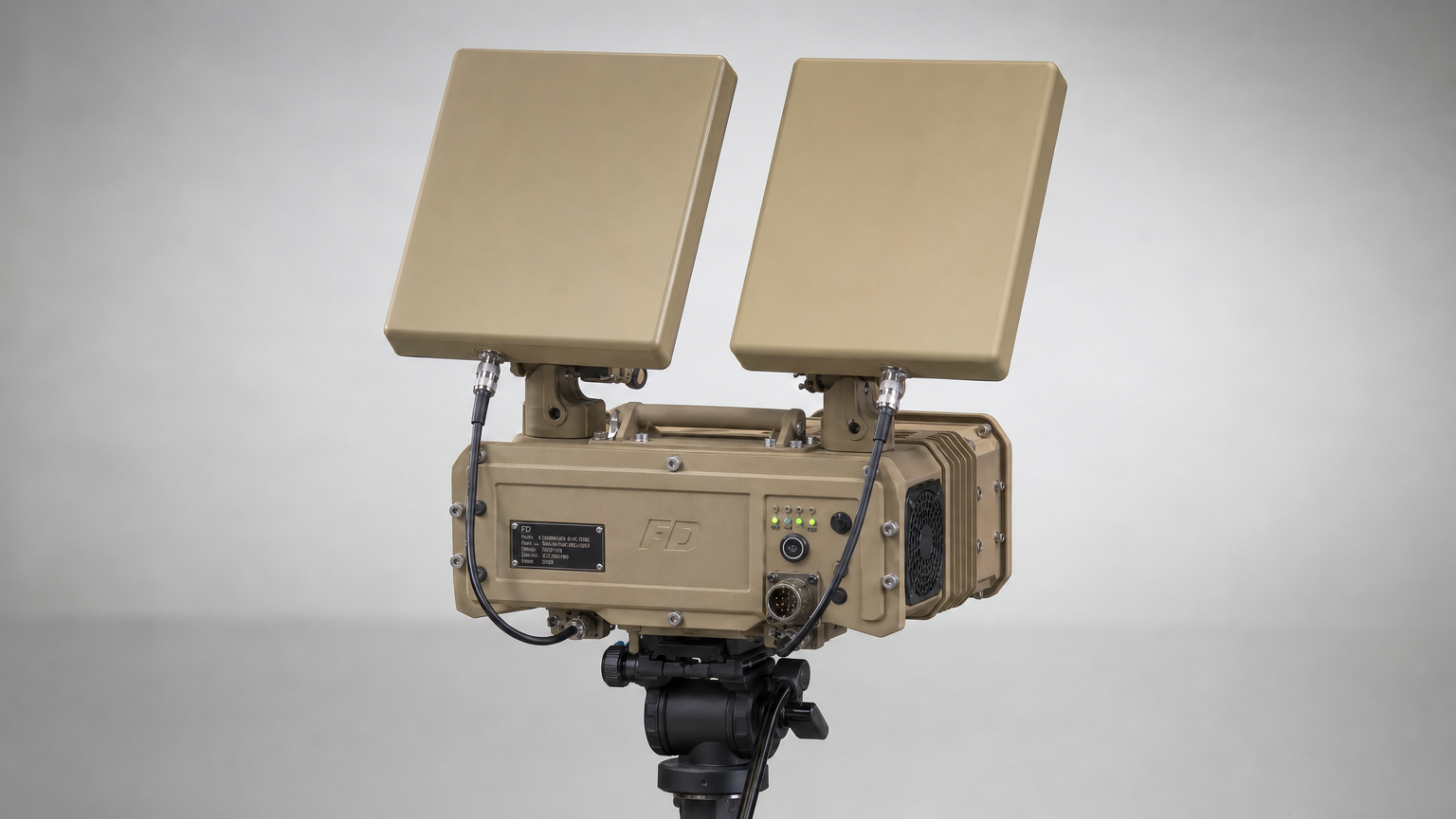
- Channels
- 2
- Power
- up to 100 W / ch.
- Band
- 400–450 · 450–550 MHz
- Polarity
- Vert. / horiz.
- Weight
- 14 kg
- IP · BAT
- IP55 · 1 h
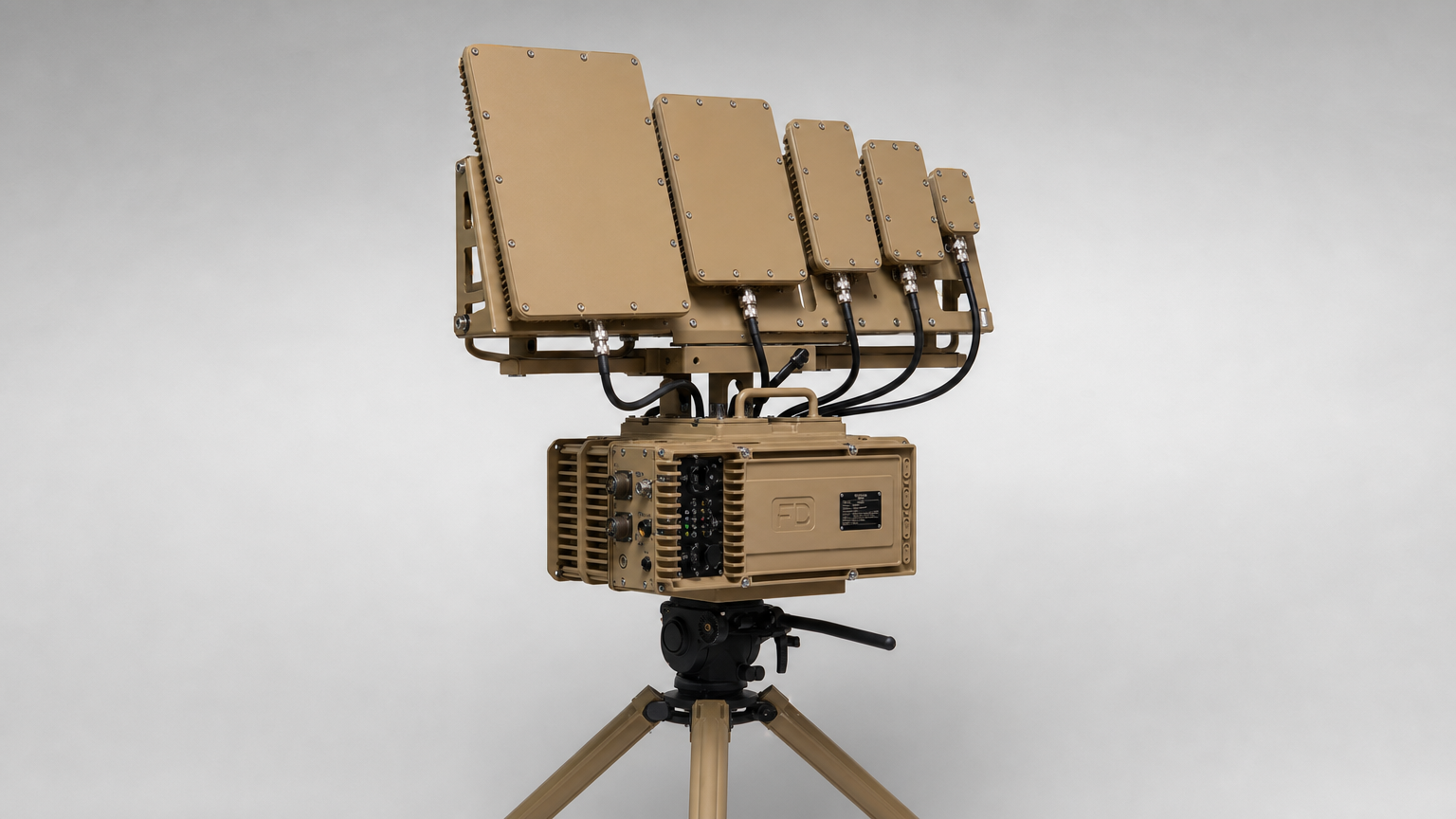
- Channels
- 5
- Power
- up to 50 W / ch.
- Band
- 860–930 · 1160–1300 · 1550–1630 · 2400–2500 · 5700–5850 MHz
- Polarity
- Vert. / horiz.
- Weight
- 14 kg
- IP · BAT
- IP55 · 1 h
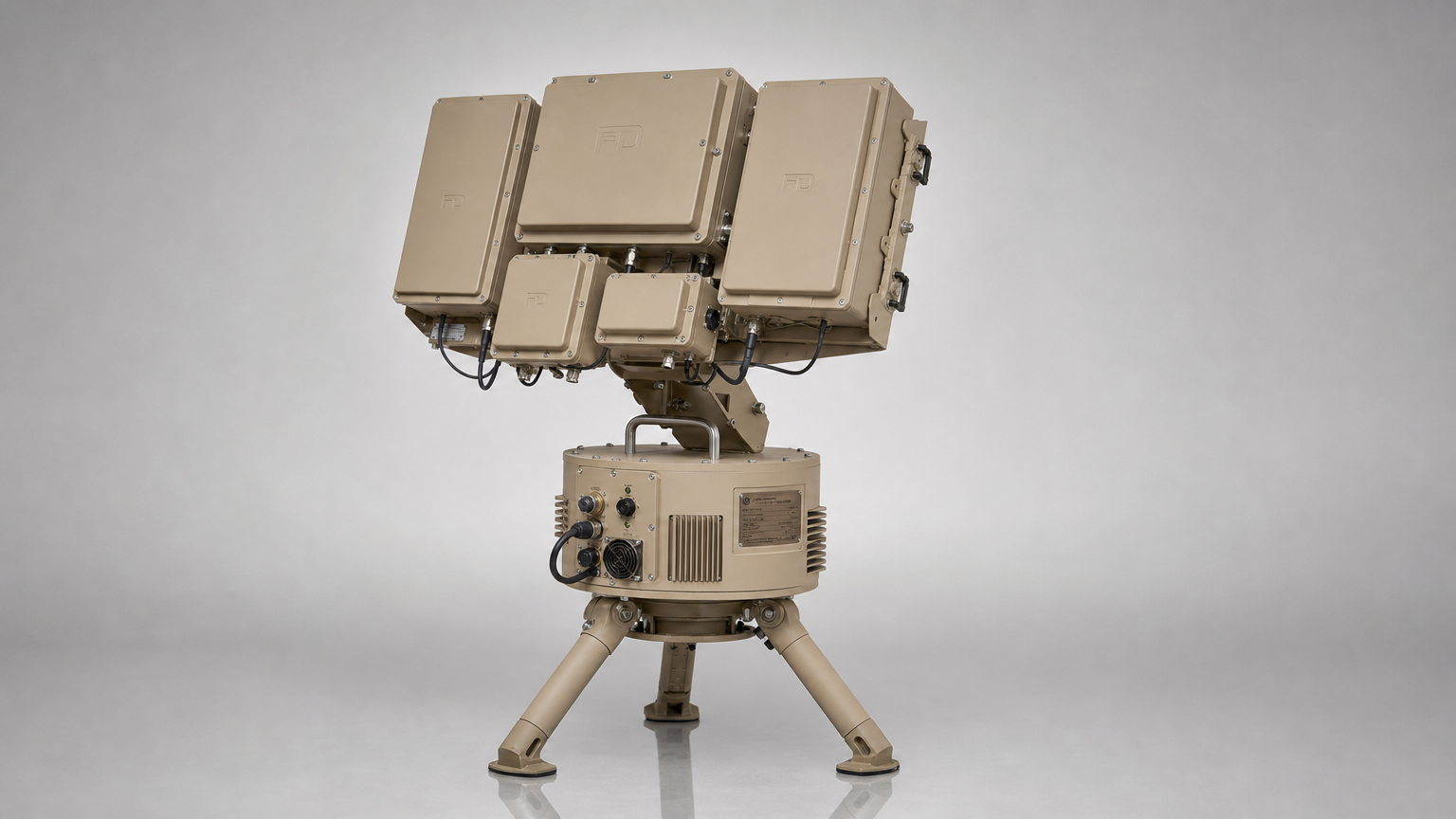
- Channels
- 7
- Power
- up to 50 W / ch. ± 1 dBm
- Band
- 710–760 · 860–930 · 1160–1300 · 1550–1630 · 2400–2500 · 5100–5300 · 5700–5850 MHz
- Polarity
- Vert. / horiz.
- Weight
- 14 kg
- IP · BAT
- IP55 · 1 h
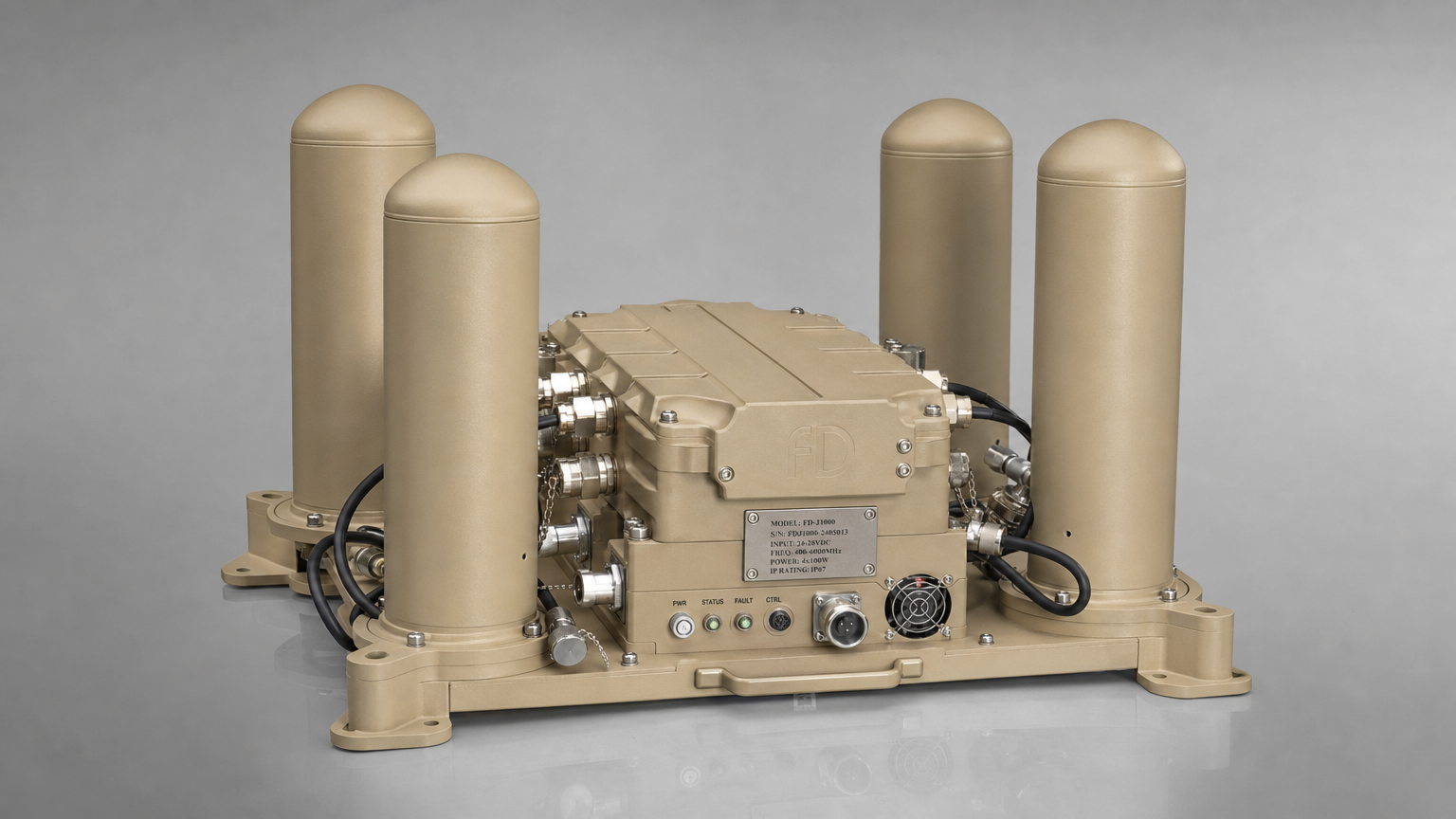
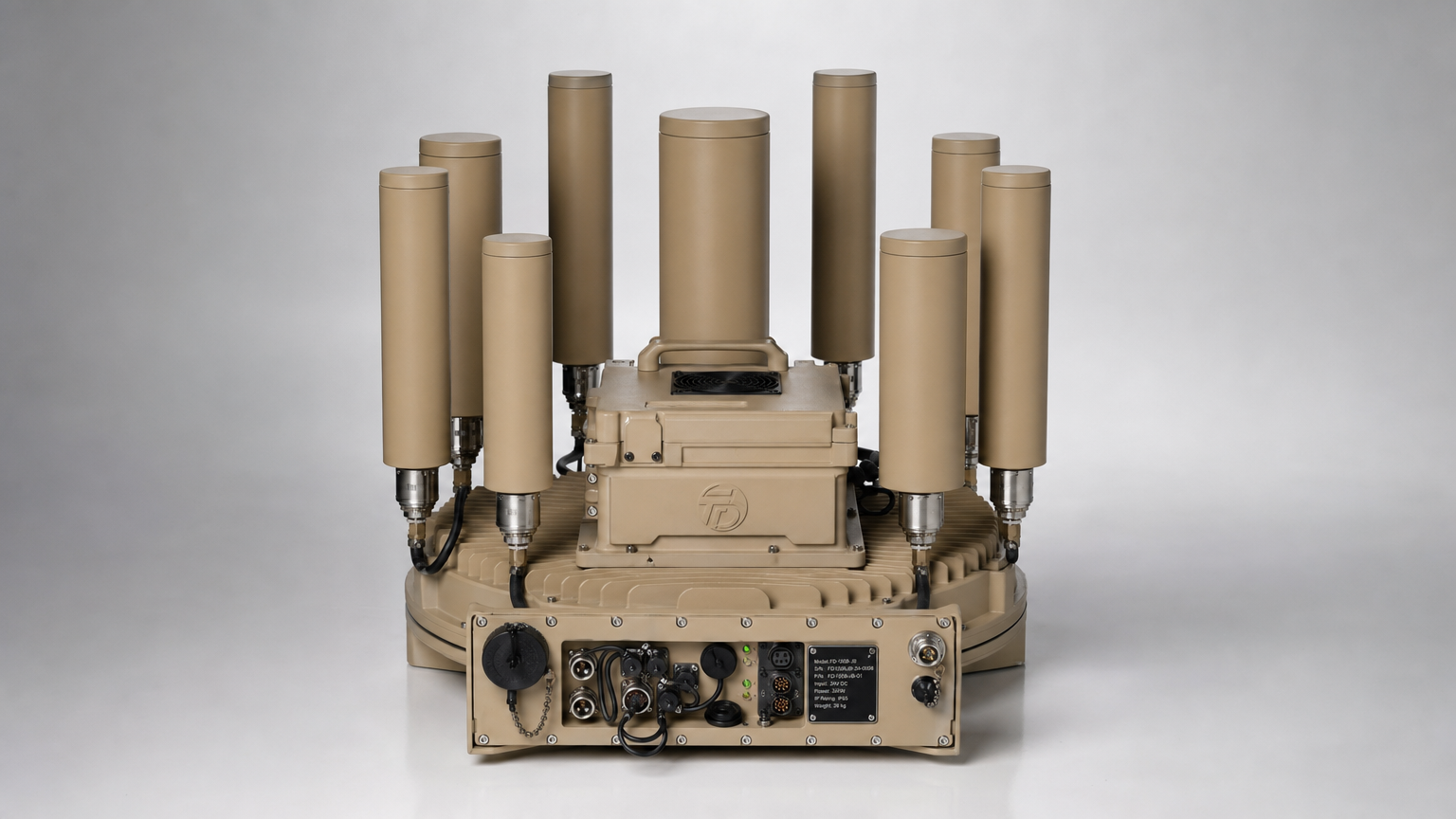
Dome protection — a 360° bubble around the asset
Omnidirectional antennas form a protective hemisphere. Mounted on vehicles, rooftops or masts. Rapid deployment, mobility, convoy escort.
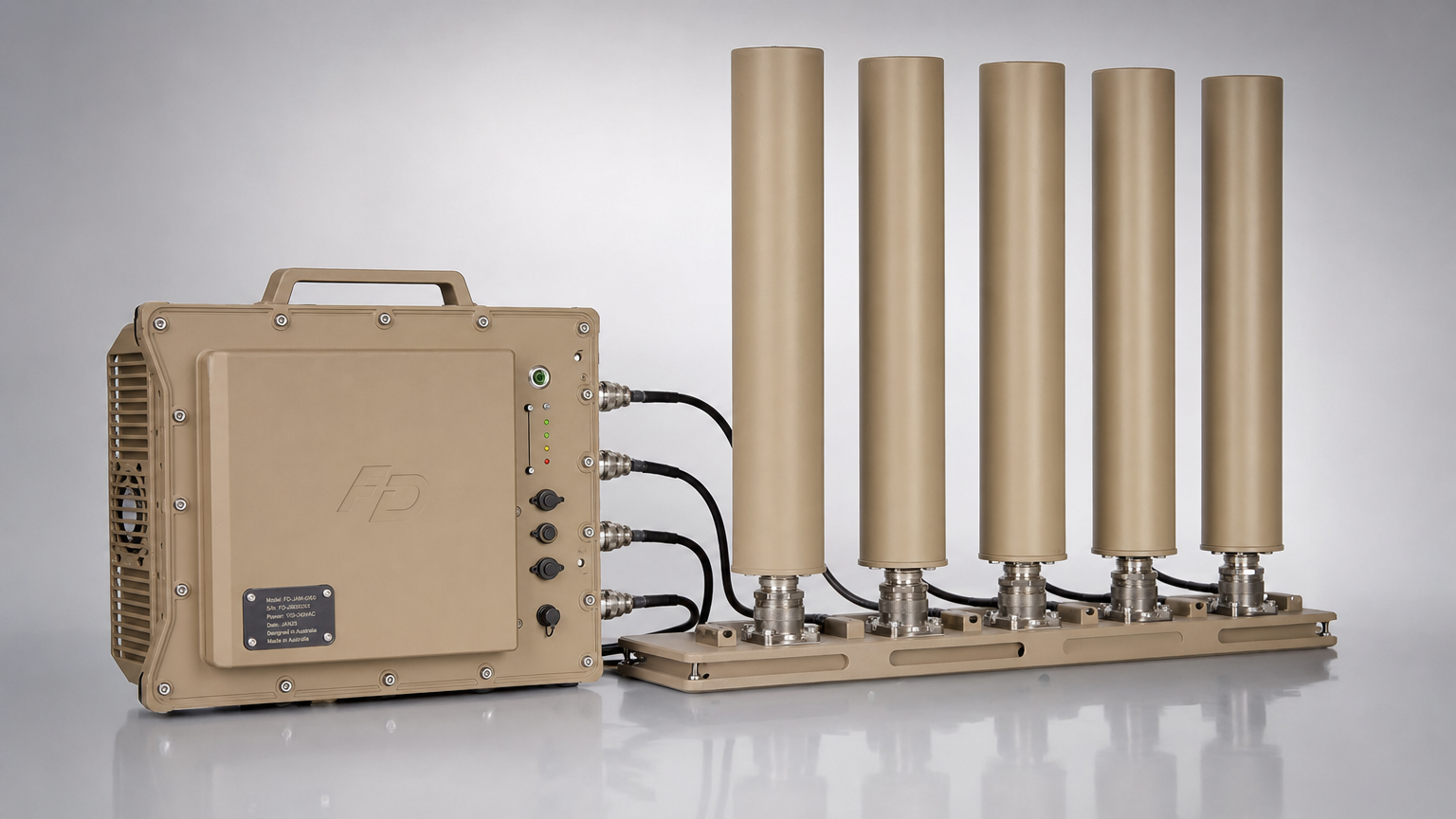
- Channels
- up to 8
- Power
- 50 W / 100 W
- Band
- 100–6,000 MHz
- Polarity
- Vert. / circ.
- RF block
- up to 6 kg / ch.
- IP
- IP55
- Channels
- up to 8
- Power
- up to 150 W
- Band
- 100–6,000 MHz
- Polarity
- Vert. / circ.
- RF block
- up to 6 kg / ch.
- IP
- IP55
- Channels
- up to 12 · 3 per rotator
- Power
- 100 / 150 W per ch.
- Band
- 100–6,000 MHz
- Polarity
- V · H · circ.
- Weight
- RF 5 kg · rotator 8.5 kg
- Power in · IP
- 220 V 50 Hz · IP55
Worn protection — the operator in the field
Personal kits for combat groups, mobile patrols and site security. Deploys in seconds. Battery-powered, fully autonomous.
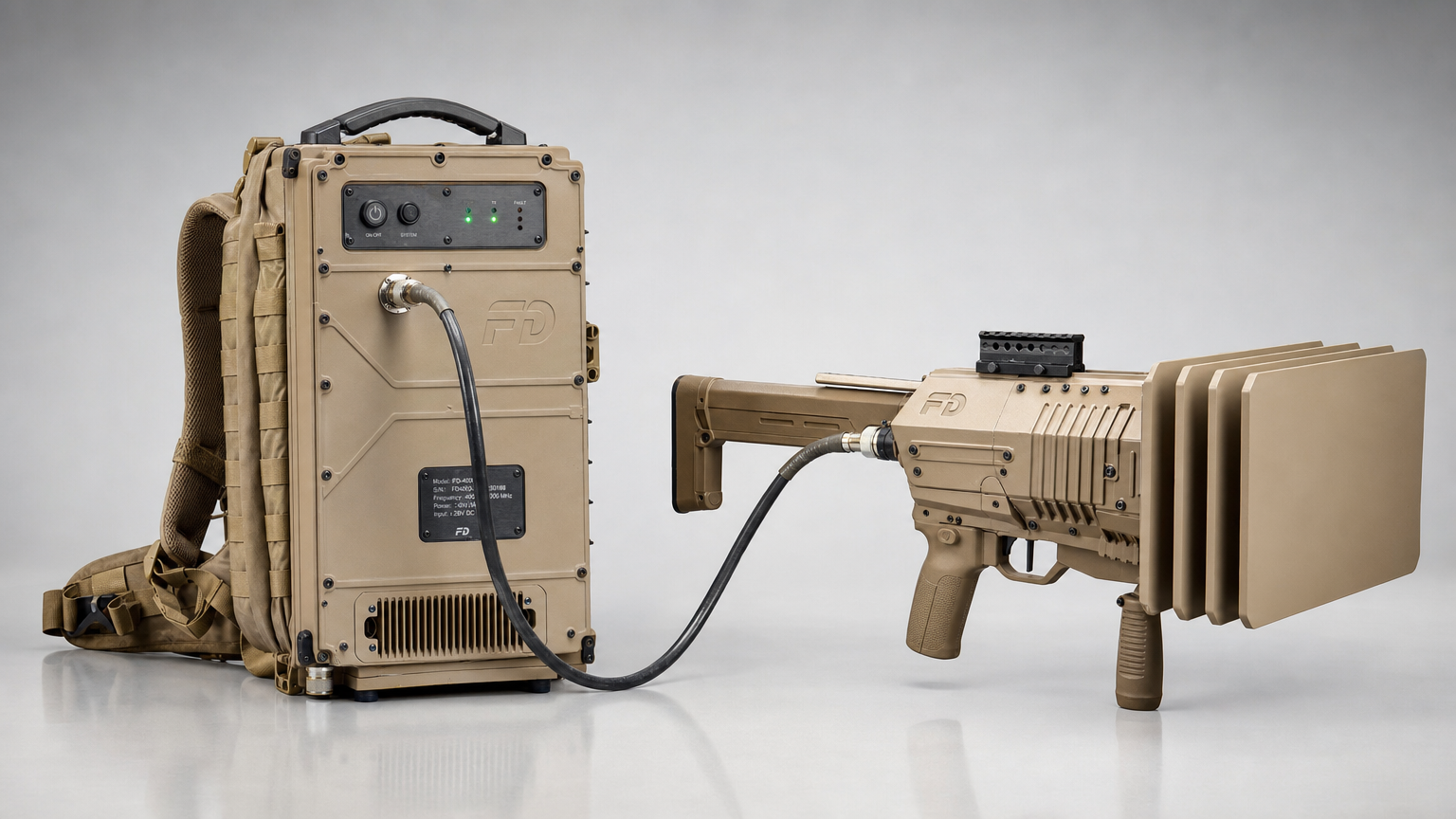
- Channels
- 5
- Power
- up to 50 W / ch.
- Band
- 860–930 · 1160–1300 · 1550–1630 · 2400–2500 · 5700–5850 MHz
- Weight
- 14 kg
- BAT
- not less than 1 h
- IP
- IP55
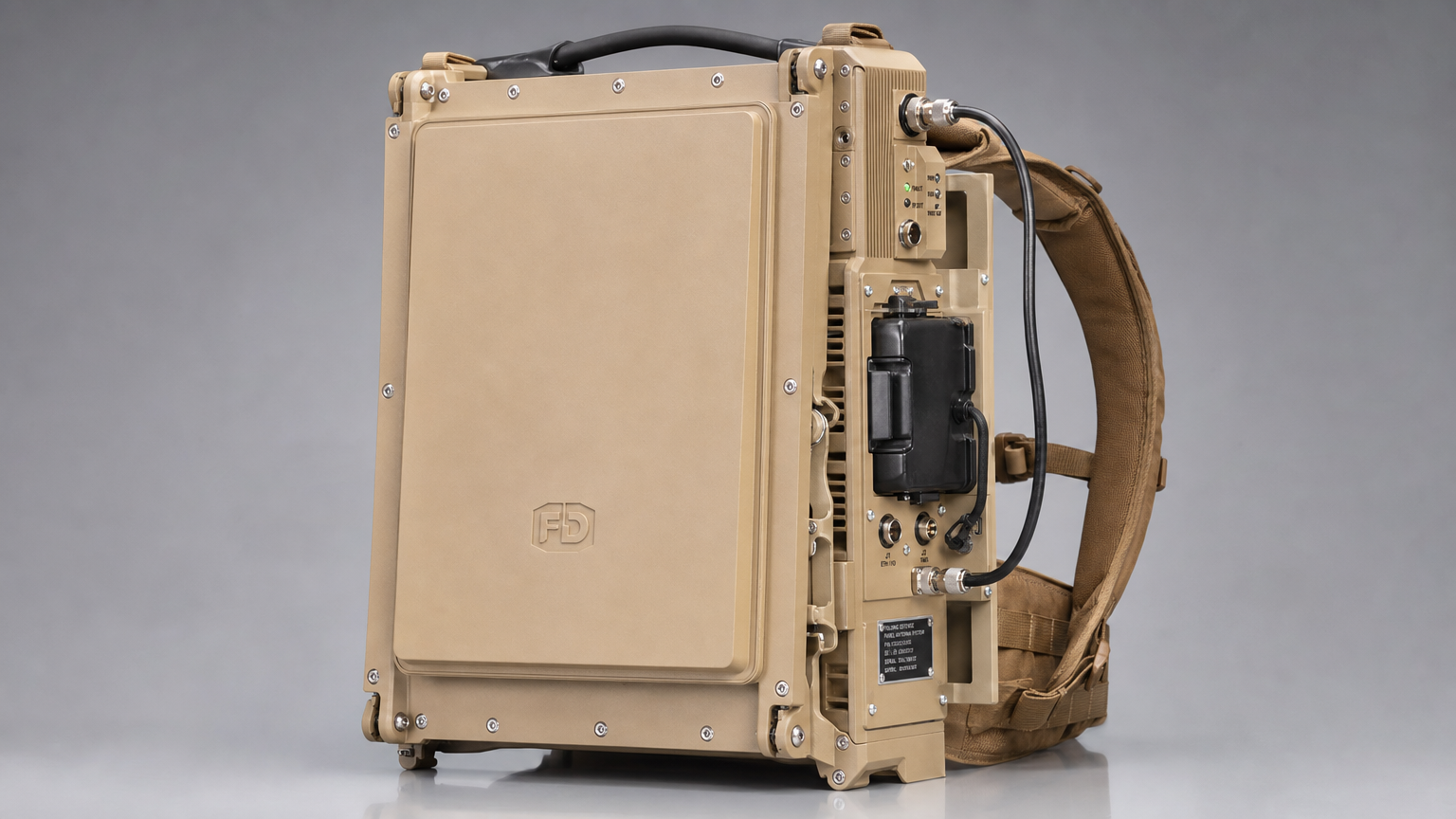
- Channels
- up to 5
- Power
- up to 50 W / ch.
- Band
- 860–960 · 2400–2500 · 5100–5300 · 5700–5850 MHz
- Weight
- up to 13 kg
- BAT
- from 30 min · swap in 20 s
- Mount
- Backpack · fixed
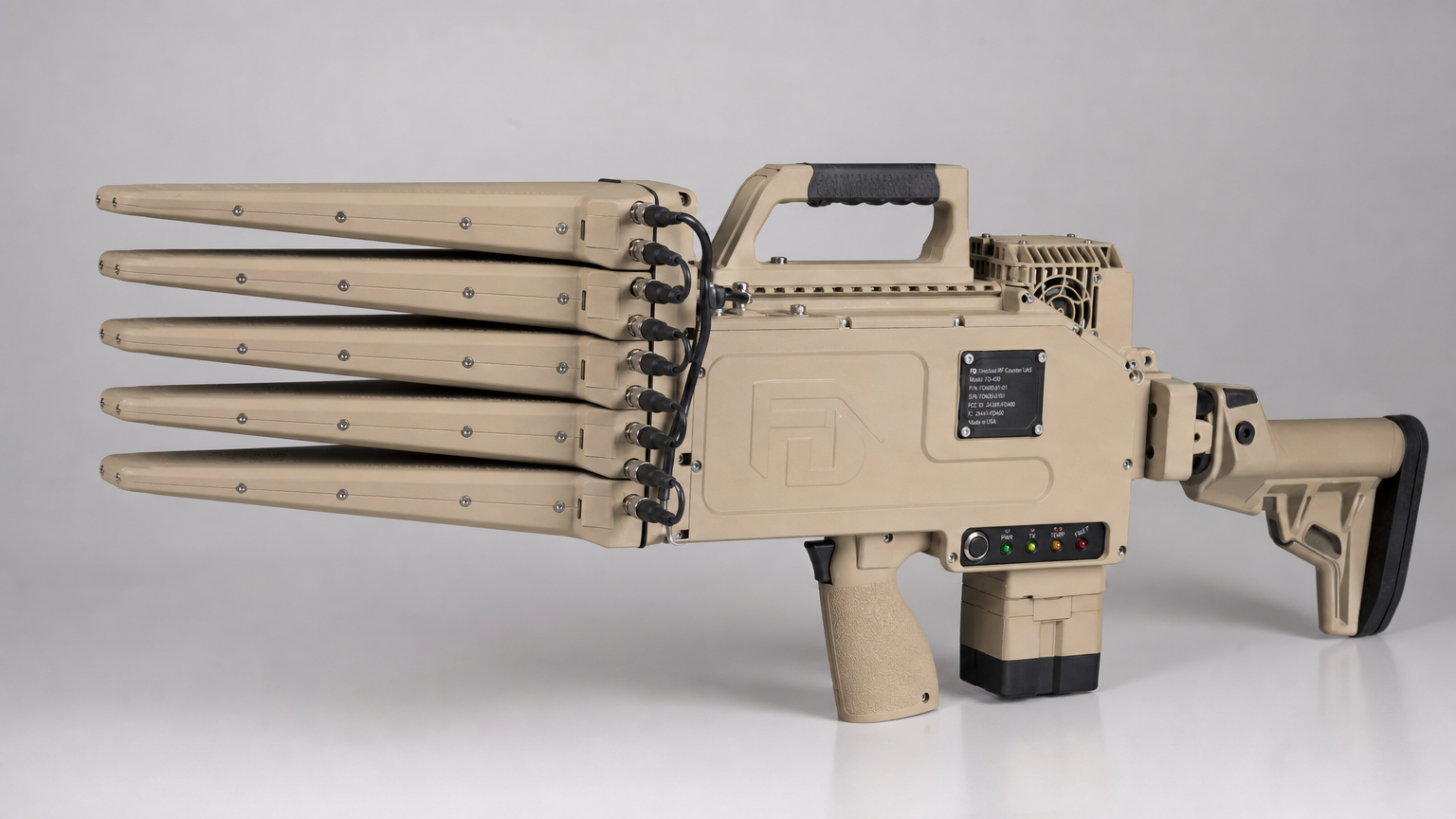
- Channels
- 3
- Power
- up to 50 W / ch.
- Band
- 860–960 or 1550–1630 · 2400–2500 · 5150–5850 MHz
- Weight
- up to 7 kg
- BAT
- from 30 min · swap
- Mount
- Handheld · tripod
High density — networked and mobile
Higher-channel platforms with deep integration. Remote control, auto-tracking, operation as part of a coordinated network.
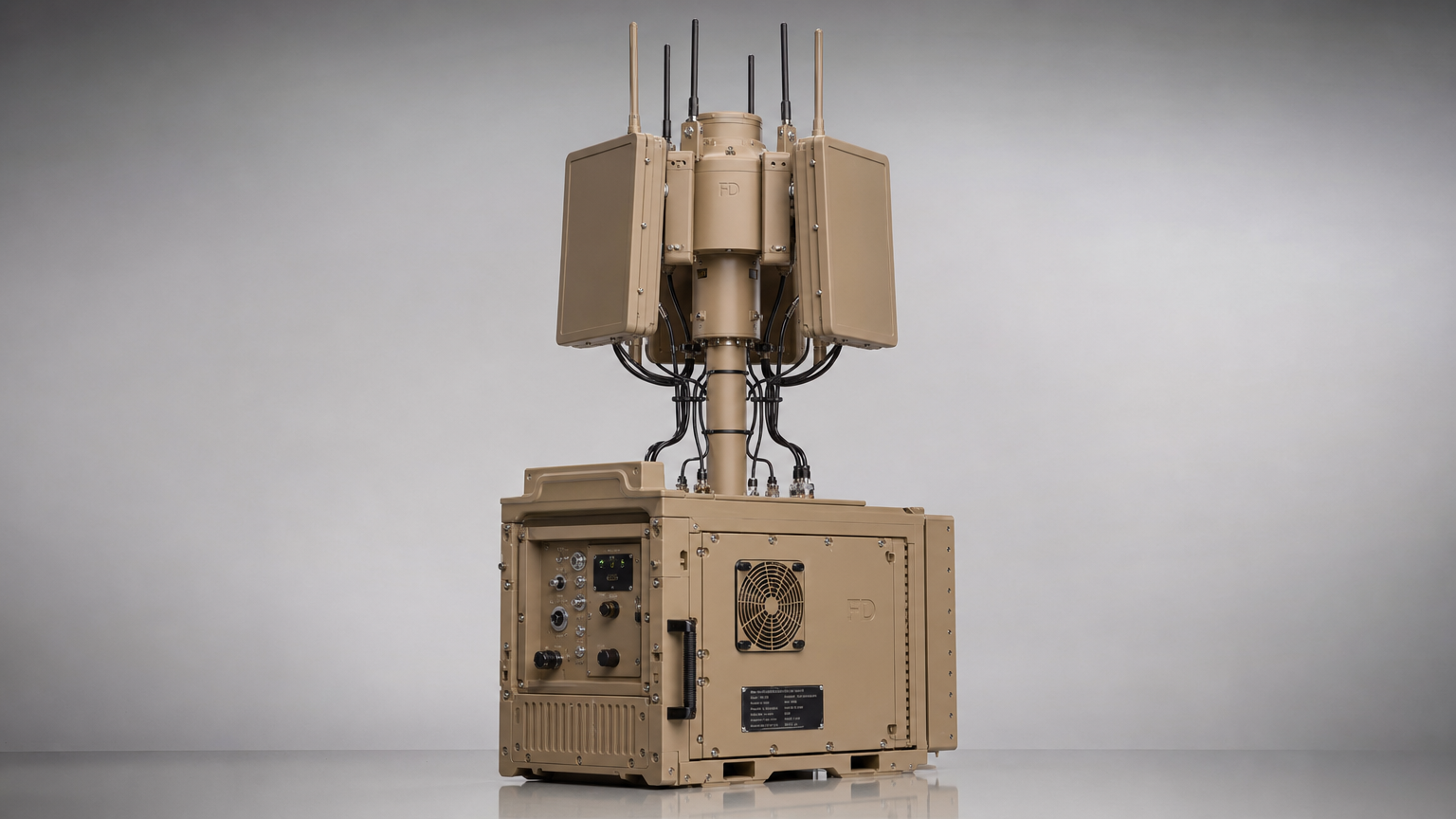
- Emitters
- 28 · up to 8 control units
- Power
- up to 100 W / ch.
- Band
- 400–5,850 MHz
- Gain
- from 5 dBi · VCO / VCO+PLL
- Temp.
- −20 / +40 °C · 5–95 % RH
- Power in · IP
- 220 V 50 Hz · IP55
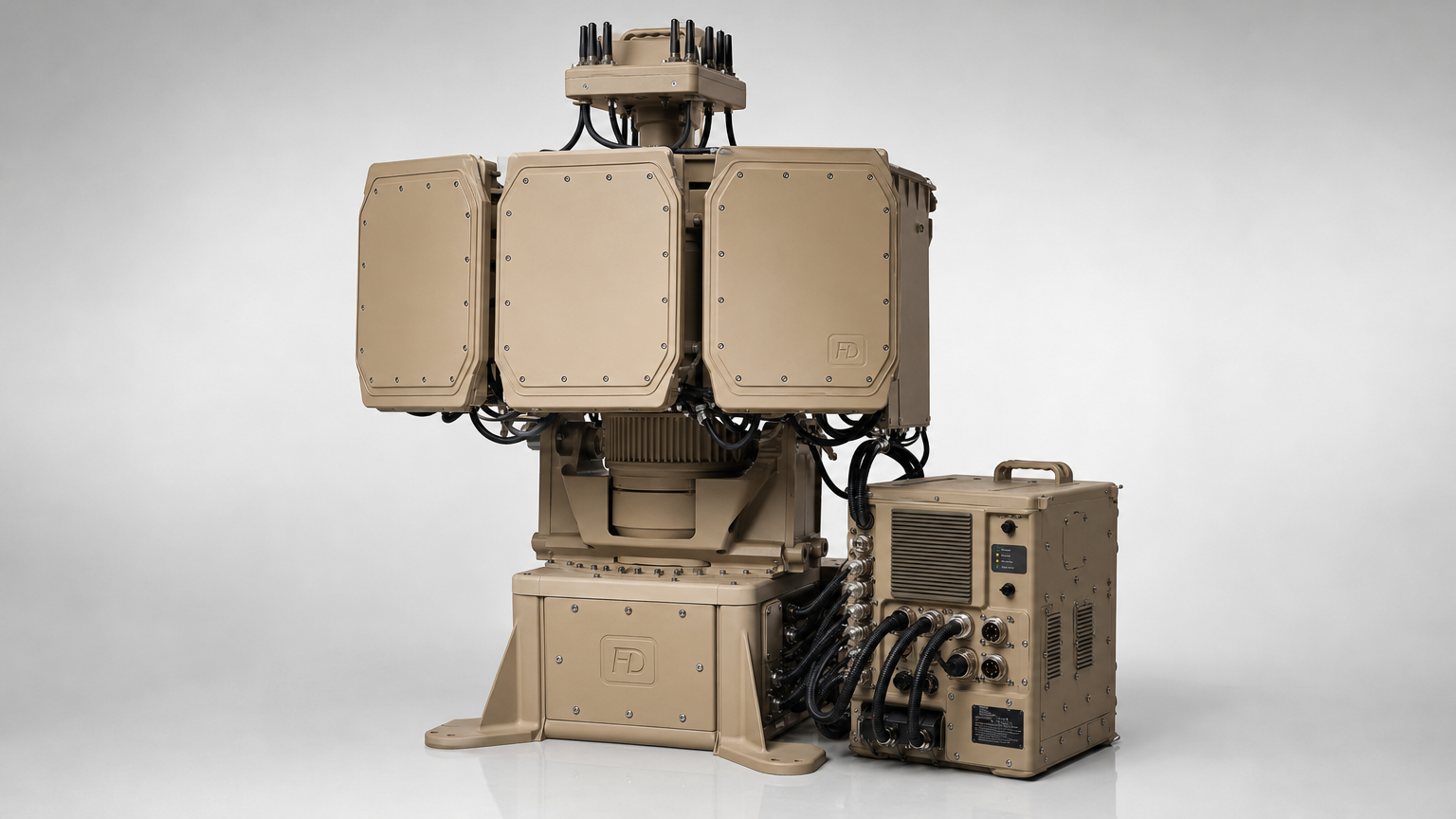
- Channels
- up to 8 directional
- Power
- up to 150 W / ch.
- Band
- 100–6,000 MHz
- Azimuth · elev.
- 350° · 0–90°
- Gain
- from 8 dBi LF · 12 dBi HF
- Supply · draw
- 24/28 V DC · 220 V · 4 kW
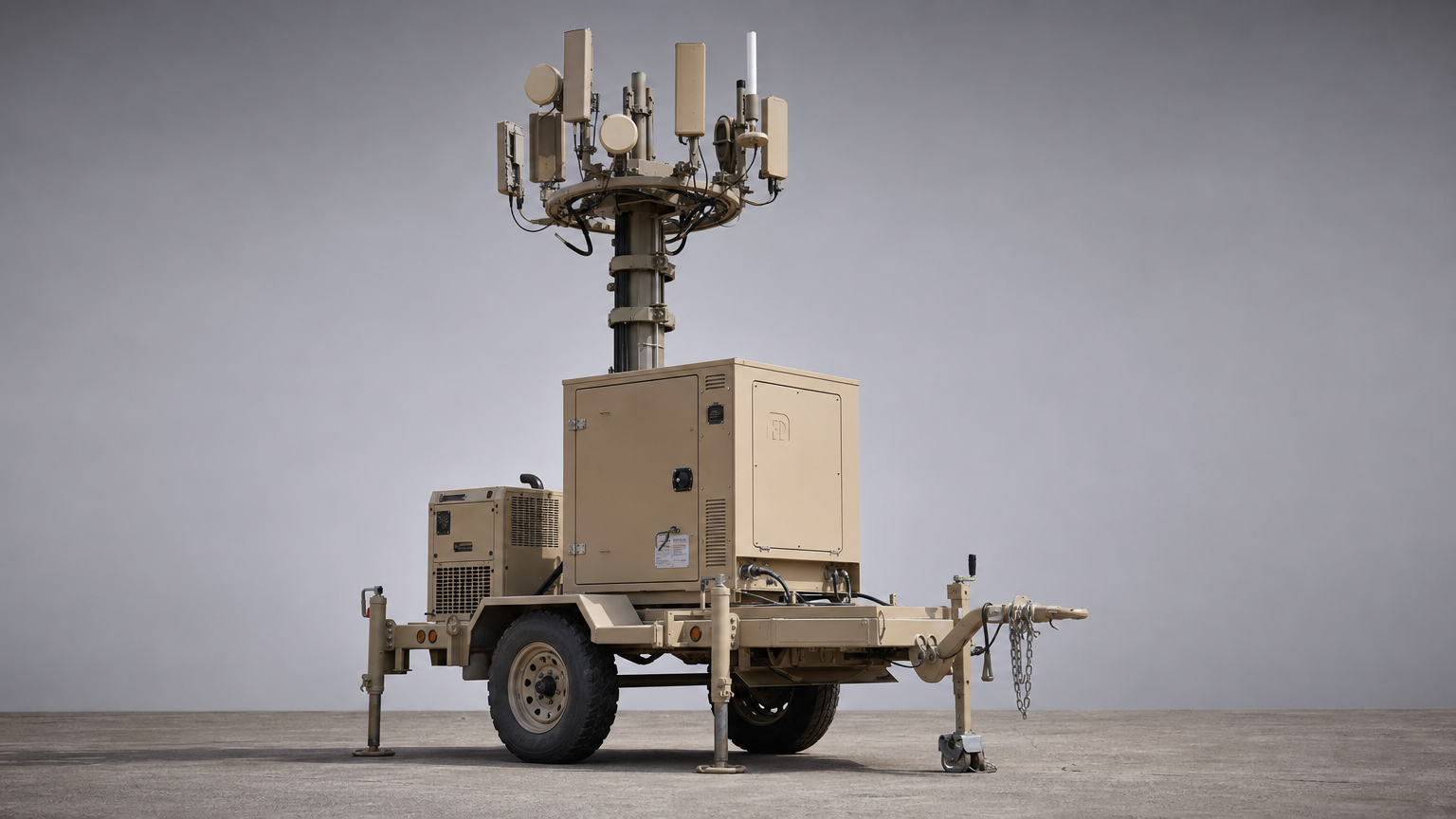
- Channels
- up to 12 · 12 antennas
- Power
- up to 250 W
- Band
- 100–5,900 MHz · from 8 dBi
- Range
- up to 10 km
- Weight
- ≤ 500 kg
- Temp. · draw
- −20 / +45 °C · 6 kW
If you don’t see it, you don’t defend it
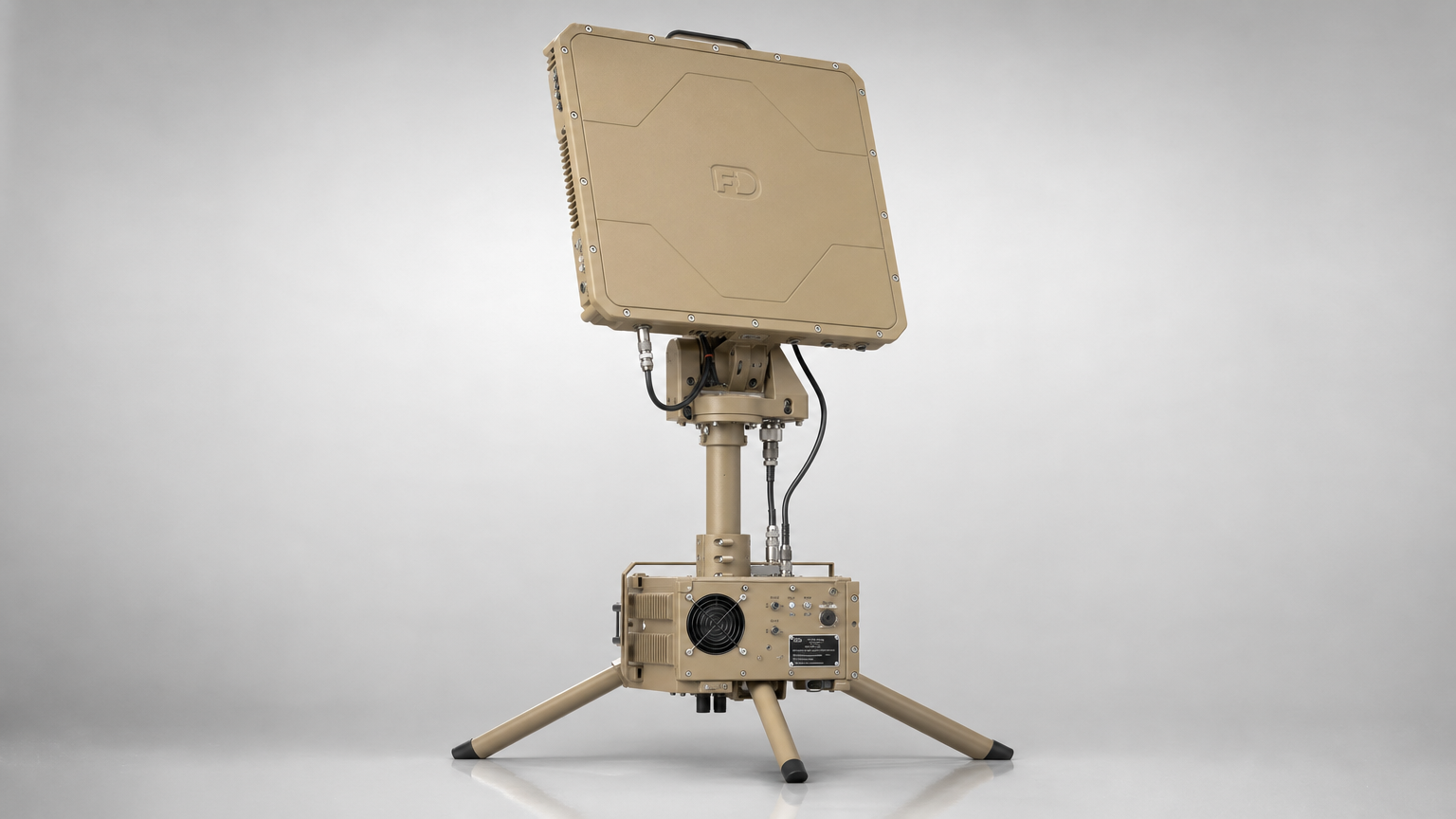
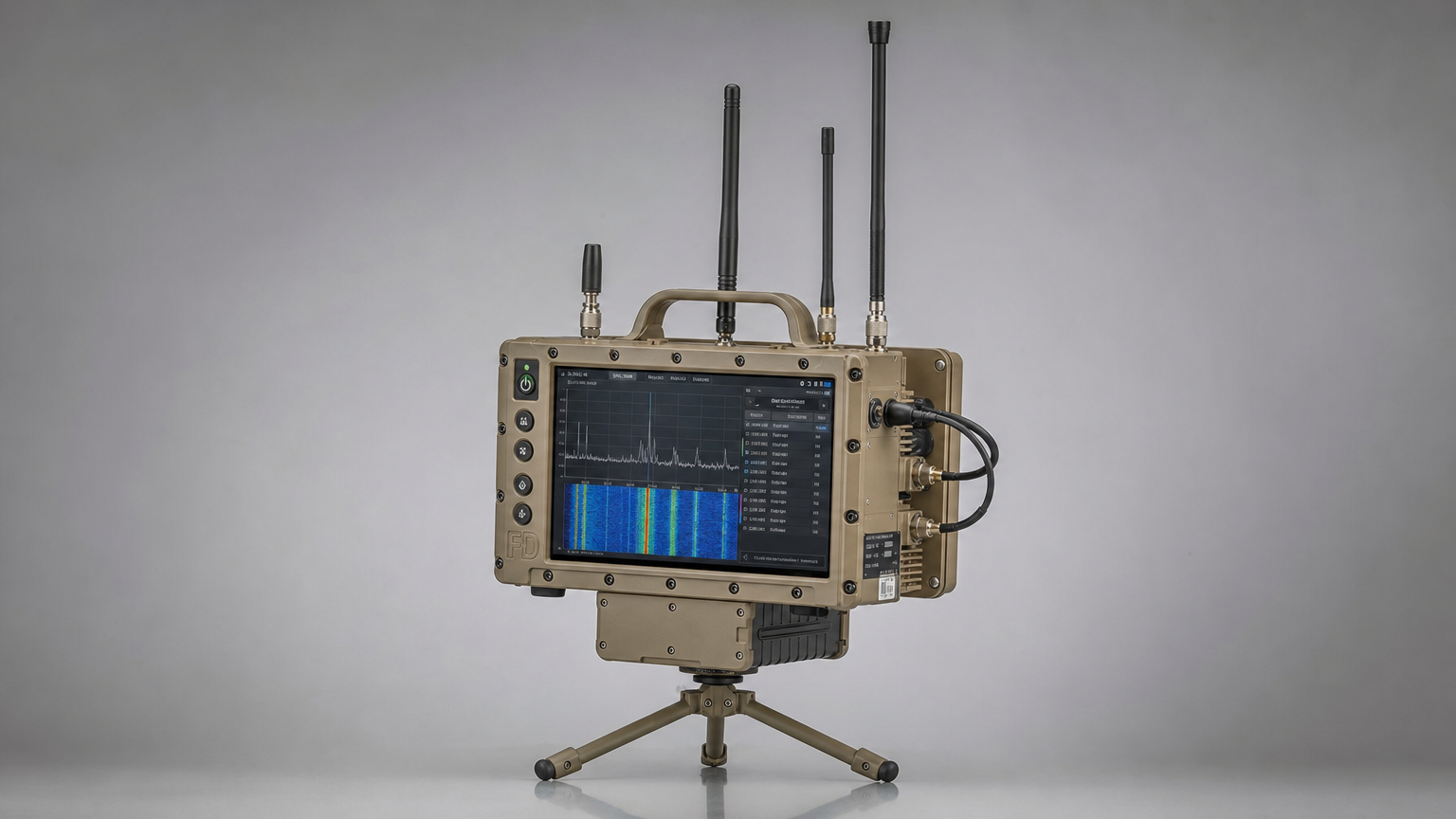
EW without sensors is just burning energy in the dark. We start with the detection layer: radar, RF intelligence, EO/IR.
- Detection
- up to 20 km
- Precise fix
- up to 6 km
- Sweep
- 360°
- Tracking
- multi-target, continuous
- Mount
- Mast · truss · mobile
- Integration
- FALAK NODE
- Band
- 300–6,500 MHz
- Range
- up to 1 km
- Target alt.
- 50–500 m
- Display
- 7″ video + TFT
- Weight · IP
- 3 kg · IP65
- Temp.
- −24 / +40 °C · to 85 % RH
The last line — TI-50 Interceptor Wing
When EW doesn’t bite — modified FPV, inertial navigation, fibre-optic links — the interceptors take over. The craft flies to the target and kills it kinetically. Two airframes: TI-H for long-range strike drones, TI-R for short-range reconnaissance targets.
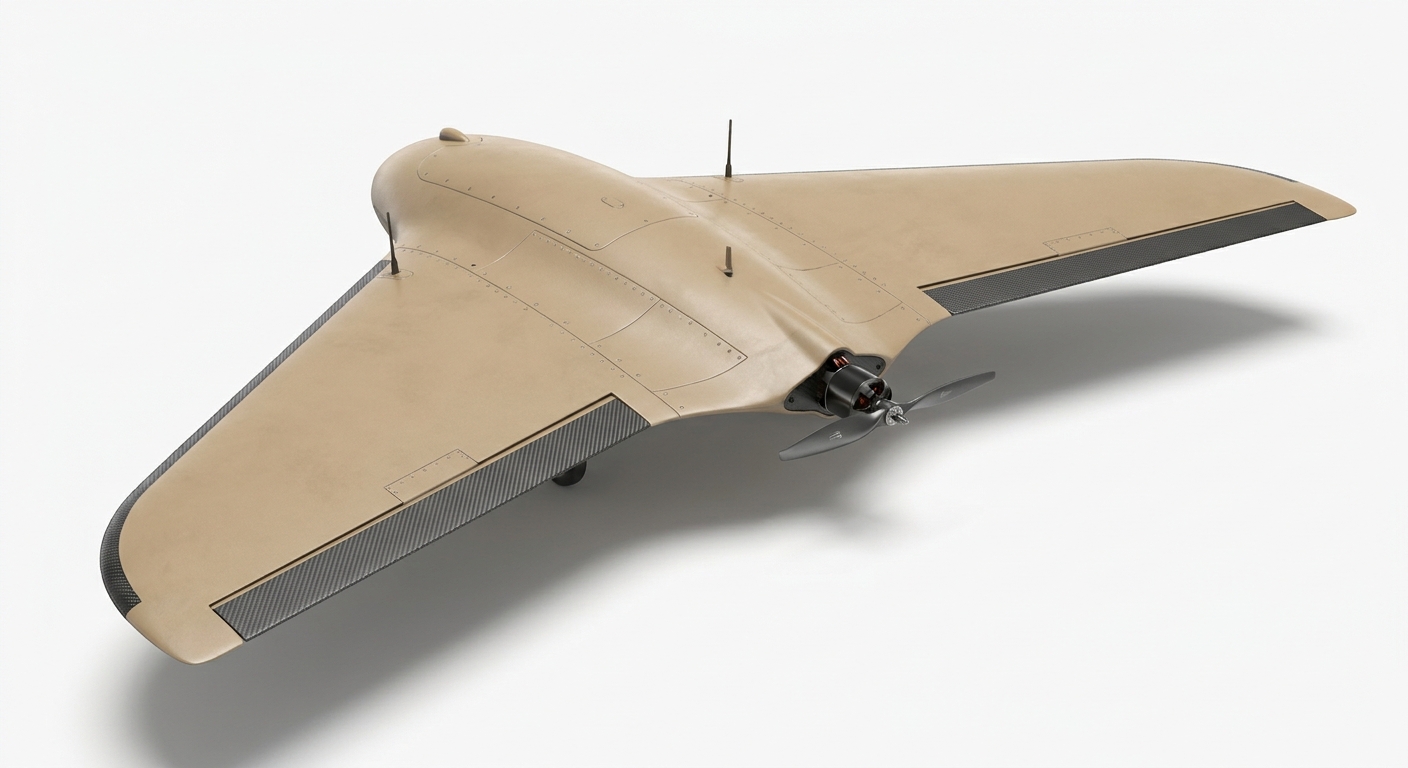
50-craft interceptor wing
Containerised package: 50 interceptor drones, a ground control station, repair kit and consumables. Deployed by a single crew.
| Parameter | TI-H · long-range | TI-R · short-range |
|---|---|---|
| Max / cruise speed | 300 / 80 km/h | 300 / 150 km/h |
| Flight time (cruise) | 75 min | 22 min |
| Max range | 100 km | 53 km |
| Tactical radius | 40 km | 23 km |
| Link range | 40 km | 35 km |
| Altitude (op. / max) | 1,000 / 5,000 m | 1,000 / 3,000 m |
| Payload | 0.7 kg · MTOW 4 kg | 0.5–0.7 kg · MTOW 3.9 kg |
| Dimensions | 1.1 m span · 0.8 m | 0.45 m span · 0.75 m |
| Launch / recovery | Catapult / horizontal | Vertical |
| Temperature | −20 / +38 °C | −20 / +55 °C |
FALAK COMMAND — one screen for the whole perimeter
Software is what turns devices into a system. Detect → classify → authorise → jam → intercept. All from one workstation.
Engineered and tested in combat
Every module has been through a combat cycle on the line of contact. This isn’t a lab solution adapted for defence — it’s defence proven under fire.
The team — engineers, frontline operators, radar and integration specialists.
In the specified frequency bands — across field testing and confirmed combat use.
In-house electronics, firmware, antenna feeds. Independence from adversary-controlled supply chains.
No foreign range reproduces what a high-intensity war teaches. Our line is a daily contest against UAV evolution: new frequencies, new protocols, new tactics — every week.
One product — three landscapes
Desert, urban, coastal — three different RF propagation regimes and three different risk profiles. Each configuration is dialled in per site after survey.
High heat, dust, salt aerosol
- Operating range up to +45 °C, active air cooling
- IP55–IP65 — electronics protected against dust and sandstorms
- Anti-corrosion coatings for coastal salt flats
- Solar backup power for remote positions
- Antennas resistant to UV ageing and sand erosion
High-rises, multipath reflections
- Directional antennas — minimal impact on civilian RF
- Selective jamming — doesn’t take down mobile beyond the zone
- Rooftop placement with low visual signature
- Coordination with telecom operators on adjacent bands
- ROE profiles for densely populated districts
Linear perimeter, sea horizon
- Node density modelled for linear coverage (~1 node / 2 km)
- Elevated masts to extend the radio horizon
- Shipborne variants on patrol craft and offshore platforms
- Protection of refineries, ports, oil-and-gas infrastructure
- Integration with the coastal radar field
The customer gets capability, not crates
Operator courses, joint exercises, a 24/7 technical line, warranty and upgrade programmes — part of the contract, not an add-on.
From a single asset to a regional perimeter
The system is modular: start with one refinery or port, grow to a city perimeter, then to a coastal line. Numbers below are illustrative; final configuration is fixed after engineering survey.
Single asset
Protection of a critical point: a single refinery, terminal, command post, VIP residence or storage site.
Urban or industrial hub
Protection of an agglomeration: refinery group, port infrastructure with approaches, central districts, airport.
Coastal or regional line
Integrated shield 200+ km long: coastline, energy infrastructure, transport corridors, national borders.
All numbers are illustrative scaling examples. Actual parameters are fixed after site survey, terrain analysis, threat assessment and density validation.
The customer is defended before full handover
Capability grows every 30 days. The first pilot sector goes on combat duty on day 30; full readiness — 360 days (L scale).
- Project mobilisation, team standup
- Site survey: position assessment, geo-planning
- Stand-up of the FALAK COMMAND post
- Pilot sector enters combat duty
- Active software integration between nodes
- Priority arc covered (at least one direction)
- Operator courses — first graduating cohort
- 24/7 helpdesk in beta operation
- ~20% of target complex count installed
- Inter-sector target hand-off rehearsed
- Service and repair team activated
- Standard operating procedures locked
- 100% of target count installed
- Integrated architecture operates as one
- Acceptance trials complete
- Hand-over to standard 24/7 support
A transparent structure of delivery and payment
One Purchase Order. Five stages. Stage payments tied to accepted deliverables. No hidden costs — all parameters confirmed after engineering survey.
Purchase Order structure
Payment and reporting terms
| 1/3 of services value | at signing |
| 50% of equipment value | at signing |
| Remainder | against deliverables, by stage |
| Invoices | monthly |
| Status reports | monthly + quarterly review |
| Service fee | fixed, tied to SLA |
- Cost per 1 km of coverage against FPV / commercial drones
- Cost per 1 km of coverage against long-range loitering drones
- Counter-UAS and radar perimeter parameters
- Monthly service fee per agreed SLA level
- Offset programme and localisation share